
You try to pay someone.
The app shows “payment failed”.
But your bank balance is lower.
If you’re searching this, you’re likely stressed — and rightly so.
A UPI payment failed but money deducted is one of the most frustrating digital payment experiences in India.
The good news?
In most cases, your money is safe and comes back automatically.
Let’s explain why UPI payments fail, who is responsible, how refunds work, and what you should do next.
Table of Contents
What Does “UPI Payment Failed” Actually Mean?
A UPI payment failed means the transaction could not be completed successfully between:
- Your bank (sender bank)
- The UPI system
- The receiver’s bank
Sometimes:
- Money is not debited → nothing to worry about
- Money is debited → refund is pending
This is where confusion begins.
Why Did My UPI Payment Fail?
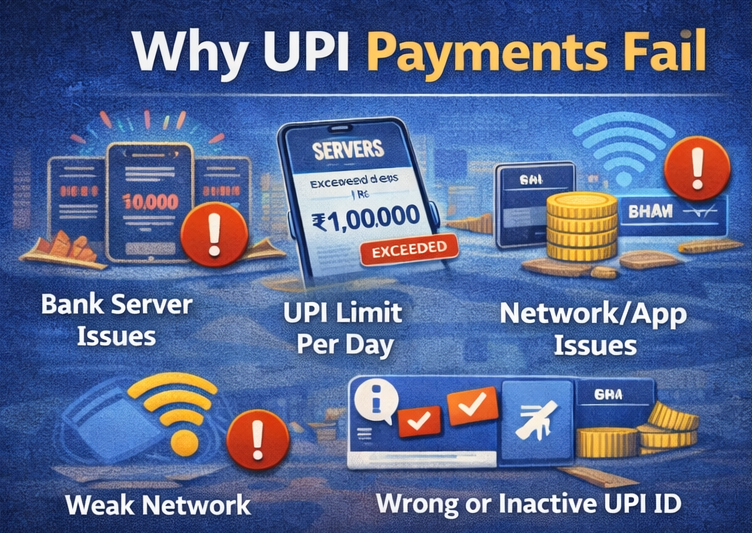
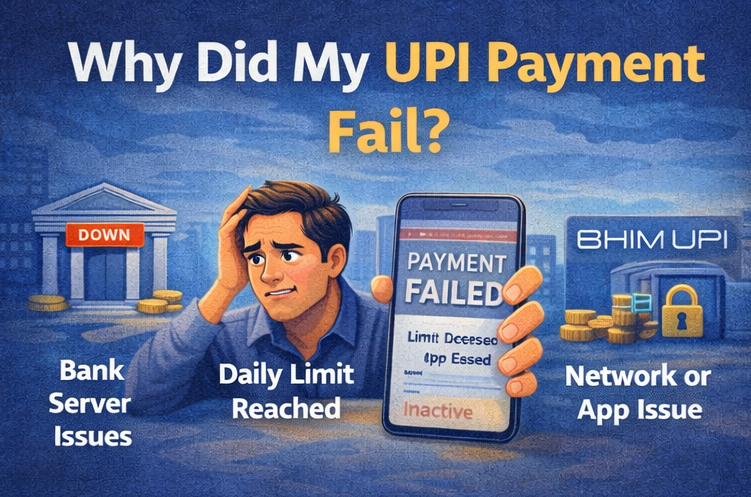
There are multiple reasons why a UPI payment failed:
1. Bank Server Issues (Very Common)
If your bank or the receiver’s bank server is slow or down, the payment fails midway.
This is why people search:
- Why are UPI transactions failing today?
- Why is UPI payment not working today?
- Is GPay having issues today?
2. UPI Daily Limit Reached
If you hit your UPI limit per day, the transaction fails.
This often happens after multiple attempts and shows as:
- payment failed
- exceeded limit
- try again later
3. Network or App Issues
Poor internet, app glitches, or outdated apps can cause upi payment failed errors.
4. Wrong or Inactive UPI ID
If the receiver’s UPI ID is inactive, closed, or incorrect, the payment may fail.
5. Repeated Attempts (Cooldown Triggered)
Multiple failed attempts can temporarily block transactions.
This is why payment failing repeatedly happens.
UPI Failed but Money Deducted – What Happened?
When money is deducted but UPI payment failed, it means:
- Your bank debited the amount
- The confirmation from the receiver’s bank did not go through
So the system marks the transaction as failed.
At this stage, the money is usually in a temporary holding state, not lost.
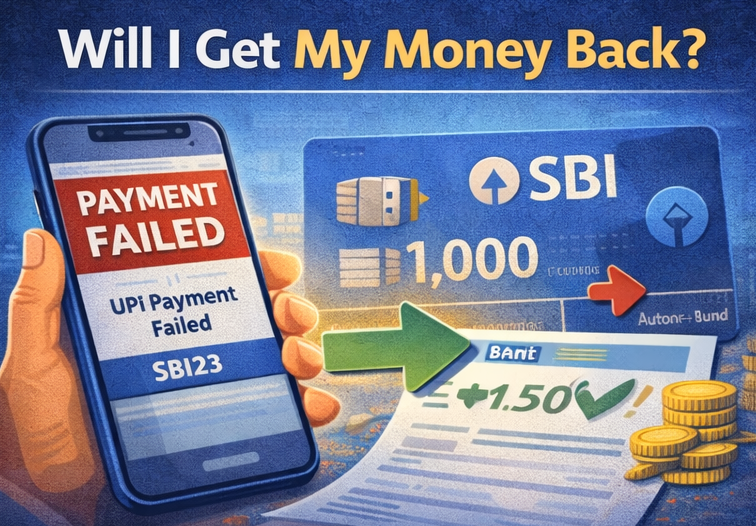
Will I Get My Money Back if My UPI Payment Failed?
Yes, in most cases.
For failed UPI transactions:
- Refunds are automatic
- No manual request is required initially
This applies to:
- BHIM UPI
- Google Pay
- PhonePe
- Paytm
- SBI UPI and others
How Long Does It Take to Reverse a Failed UPI Payment?
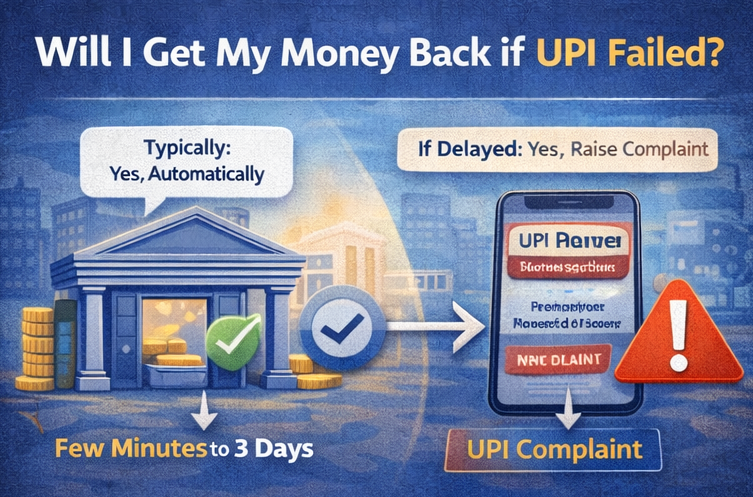
Typical timelines:
- Within a few minutes (best case)
- Within 24 hours (common)
- Up to 3 working days (rare but allowed)
If it goes beyond this, you should raise a UPI complaint.
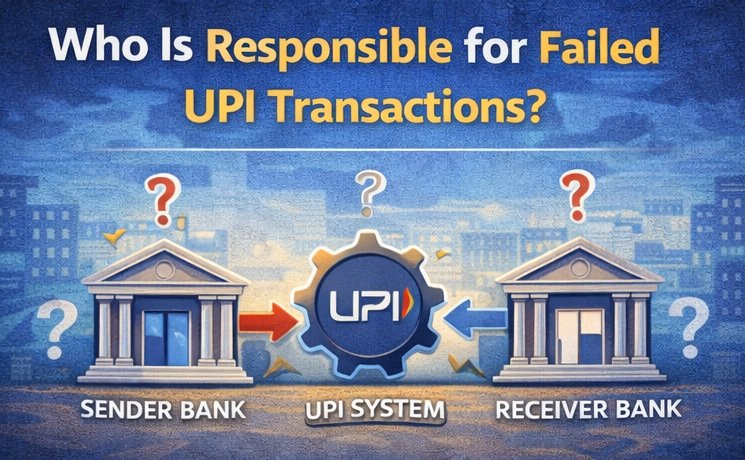
Who Is Responsible for a Failed UPI Transaction?
Responsibility depends on where the failure happened:
- Your bank → if debit happened but confirmation failed
- Receiver’s bank → if credit confirmation failed
- UPI system → if routing failed
You, as the user, are not at fault in most cases.
How Do Banks Handle Failed UPI Transactions?
Banks follow a standard process:
- Detect failed transaction
- Check settlement status
- Auto-reverse the amount
- Credit it back to your account
This is why most refunds happen without complaints.
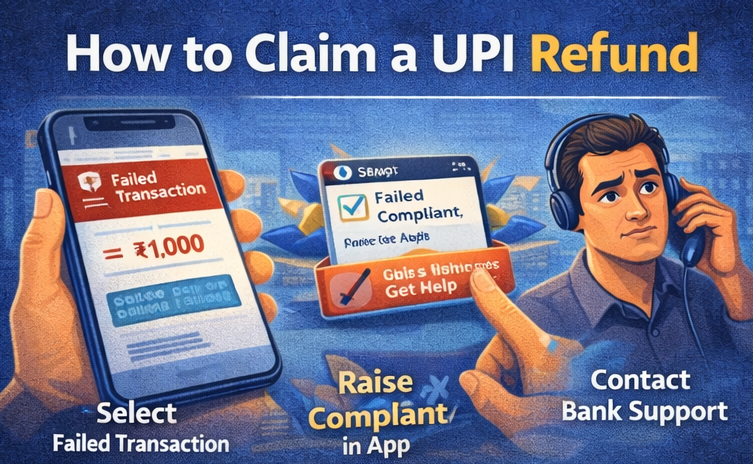
How to Claim UPI Refund (If It’s Delayed)
If money does not come back:
Step 1: Raise a UPI Complaint in the App
All apps allow this.
Look for:
- “Transaction History”
- Select the failed transaction
- Click Raise Complaint / Get Help
This applies to BHIM UPI, Google Pay, PhonePe, etc.
Step 2: Contact Your Bank
If app support doesn’t help:
- Contact your bank’s customer care
- Share transaction ID
For SBI users, failed transactions sometimes show codes like SBI23 or similar internal references — these help banks trace the issue.
Can Banks Reverse a UPI Payment?
- Failed UPI payment → Yes, automatically
- Successful UPI payment → No (unless receiver refunds)
This distinction is very important.
What Is 9999 Used For?
9999# is a USSD-based UPI service for basic phones.
You can:
- Check balance
- Send money
- Use UPI without internet
It follows the same refund rules for upi payment failed cases.
Why Are Bank Transactions Not Happening Today?
This usually happens due to:
- Bank maintenance
- NPCI downtime
- High traffic hours
When this happens, many users face UPI payment failed errors at the same time.
Frequently Asked Questions (Google Snippet Friendly)
Will my money be refunded if my UPI payment failed?
Yes. Failed UPI payments are usually refunded automatically within 24 hours.
How do I get a refund of a failed UPI transaction?
Wait for auto-refund. If delayed, raise a UPI complaint inside the app.
Do failed UPI transactions get refunded?
Yes, unless the transaction shows “successful”.
Why is my payment failing repeatedly?
Possible reasons include daily limit reached, bank server issues, or temporary blocks.
Who is responsible for UPI failed transactions?
The bank or UPI system, not the customer.
What happens if the UPI payment failed?
Money is either not debited or refunded back to your account.
Related Reads
If you’re facing repeated UPI issues, these may help:
- Service Charges debited from my bank account – what does it mean?
- UPI Transaction Limits in India Explained
- Why did my bank deduct ₹236 suddenly?
Understanding these together helps you avoid panic and repeated failures.
Still Confused About a Failed UPI Transaction?
UPI apps show errors, not explanations.
Coming soon on ExplainThis.tech:
You’ll be able to upload your UPI transaction or bank statement and instantly understand:
- Why the payment failed
- When the refund will arrive
- Whether you need to take action
No waiting. No guessing. Just clarity.
Final Thought
A UPI payment failed is annoying — but rarely dangerous.
Your money is almost always safe.
Understanding how UPI failures work helps you stay calm and act only when needed.
That’s exactly what ExplainThis.tech is here for.