
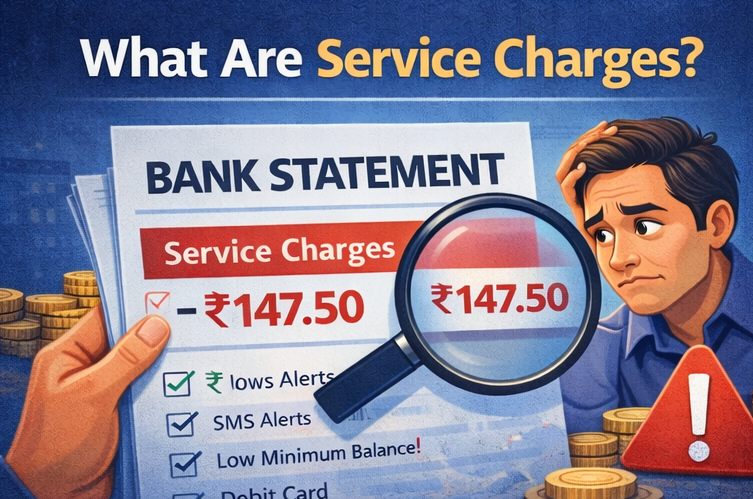
You open your bank statement and see a line that simply says:
“Service Charges – ₹147.50”
No warning. No explanation. Just money gone.
If you’re wondering why your bank debited service charges, you’re not alone. This is one of the most searched and misunderstood banking deductions in India.
Let’s break down what service charge means in banking, why it appears, and how you can stop paying it.
Table of Contents
What Is a Service Charge in a Bank Account?
A service charge is a fee banks deduct for maintaining or servicing your account.
In simple words:
Banks charge you for providing certain services — even if you didn’t actively use them.
These deductions are usually automatic, which is why they feel sudden or “without permission”.
What Does “Service Charge” Mean in Banking?
In banking, service charge can include fees for:
- Account maintenance
- Minimum balance shortfall
- Debit card usage or renewal
- SMS alerts
- Excess ATM withdrawals
Banks often group these under one vague label called service charge instead of explaining each item clearly.
Why Does the Bank Take Service Charges?
Banks deduct service charges to cover:
- Account maintenance costs
- Infrastructure and system costs
- Compliance and operational expenses
The problem isn’t why banks charge — it’s that they don’t explain it clearly.
Why Did I Get a Service Charge on My Bank Account?
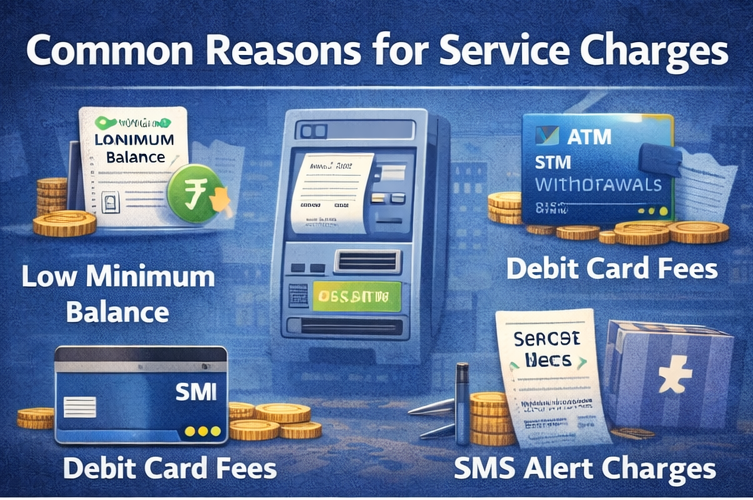
This usually happens due to one of these reasons:
1. Minimum Balance Not Maintained (Most Common)
If your monthly average balance fell below the required limit, a service charge is deducted.
This explains common questions like:
- Why was ₹147.50 debited from my account?
- Why is 147.50 debited from SBI account?
That amount often matches minimum balance penalty slabs.
2. Debit Card Annual or Quarterly Charges
Banks charge for:
- Debit card issuance
- Annual renewal
- Inactivity or usage fees
These are often silently clubbed under service charge.
3. SMS Alert & Account Maintenance Fees
Even SMS alerts and basic maintenance can trigger a service charge debit.
4. Excess ATM Withdrawals
Using ATMs beyond free limits leads to small but repeated service charges.
Why Is My Bank Debiting Money Without Permission?
This is a common fear — but here’s the truth:
👉 You gave permission when you opened the account.
Service charges are mentioned in:
- Account opening form
- Terms & conditions
- Bank tariff sheets
The issue is lack of awareness, not illegal deduction.
Is It Legal for Banks to Deduct Service Charges?
Yes, service charges are legal if:
- They are disclosed in bank policies
- The bank follows RBI guidelines
- Charges are within prescribed limits
However, banks are expected to inform customers clearly, which often doesn’t happen.
What Is an Example of a Bank Service Charge?
Here are common examples:
- ₹147.50 for minimum balance shortfall
- ₹100–₹200 debit card annual fee
- ₹20–₹25 per extra ATM withdrawal
- Quarterly account maintenance fees
All of these may appear simply as “service charges”.
Can I Claim Back Bank Service Charges?
Sometimes — yes.
Banks may reverse service charges if:
- It’s the first time
- You maintain a good account history
- You are a senior citizen or student
- You request politely
Many people don’t ask. Those who do often succeed.
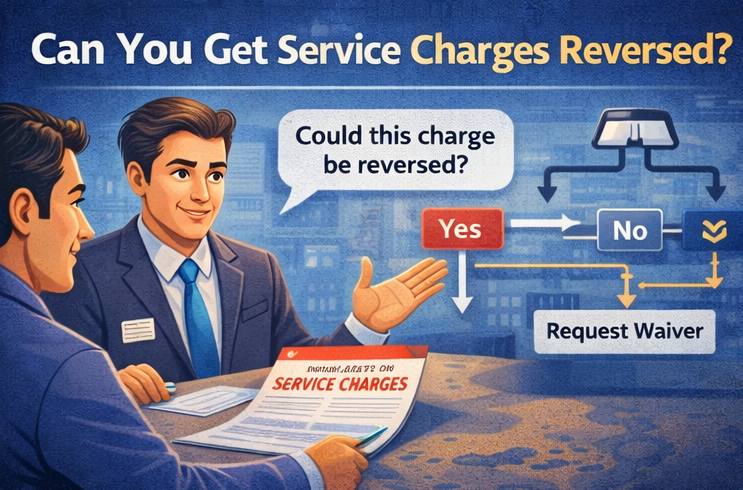
How to Ask the Bank to Waive Service Charges
You don’t need arguments. Use clarity.
Example:
“This service charge was deducted without my awareness. I’ve been maintaining my account regularly. Could you please reverse it as a one-time exception?”
This answers:
- How do I ask my bank to waive a fee?
- Can we remove service charges?
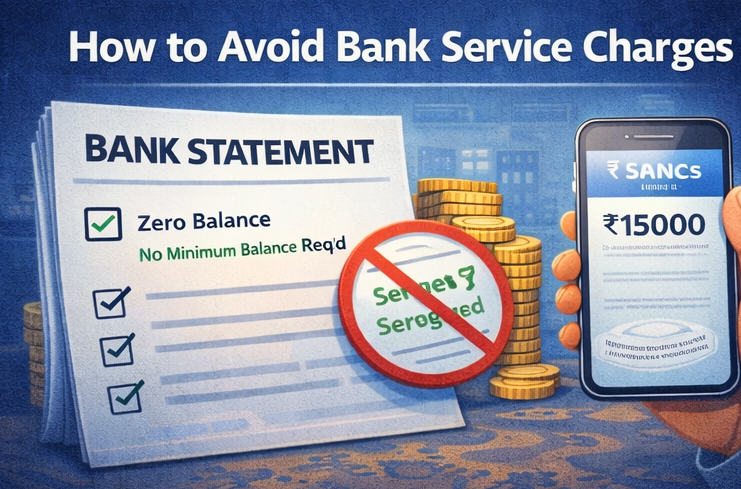
How to Avoid Service Charges in the Future
1. Maintain the Required Average Balance
Even keeping ₹1,000–₹2,000 extra can prevent service charges.
2. Switch to Zero-Balance Accounts
Many banks offer zero-balance savings accounts with no service charge at all.
3. Track Debit Card & SMS Charges
Disable paid SMS alerts or downgrade cards if you don’t need them.
4. Review Your Statement Monthly
One glance per month helps you catch service charges early.
How to Avoid Service Charge on Debit Card?
- Check if your debit card has an annual fee
- Ask for a basic or zero-fee debit card
- Close unused cards linked to your account
Frequently Asked Questions (Google Snippet Friendly)
What is meant by service charge in a bank?
A service charge is a fee deducted by banks for maintaining or servicing your account.
Why am I charged a service charge?
Usually due to minimum balance shortfall, debit card fees, or account maintenance charges.
Why was ₹147.50 debited from my account?
This amount often matches minimum balance penalty or maintenance fee slabs.
Can I avoid monthly service fees?
Yes. Maintain minimum balance, use zero-balance accounts, and monitor account charges.
Why is my bank debiting money automatically?
Banks auto-debit service charges as per account terms you agreed to at account opening.
Can service charges be removed?
Some banks waive service charges on request, especially for first-time deductions.
Still Confused About a Deduction in Your Statement?
Bank statements are written for systems — not people.
Coming soon on ExplainThis.tech:
You’ll be able to upload your bank statement and get a clear, simple explanation of every service charge — why it happened and how to avoid it next time.
No panic. No guessing. Just clarity.
Final Thought
A service charge doesn’t mean you did something wrong.
It usually means you weren’t told clearly.
Once you understand service charges, they stop being scary — and start being manageable.
And that’s exactly what ExplainThis.tech is here for.
Related Reads
If you’re facing repeated Service Charges, these may help:
- Minimum Account Balance (MAB) Charges Explained 236 debited?
- UPI Transaction Limits in India Explained
- Why did my bank deduct ₹236 suddenly?
Understanding these together helps you avoid panic and repeated failures.
Pingback: UPI Transaction Limits in India Explained -
Pingback: Hidden Bank Fees in India You’re Probably Paying (And How to Spot Them Before They Hurt) -
Pingback: UPI Payment Failed but Money Deducted – When Will I Get It Back? -