
If you have ever tried to file a health insurance claim and heard the line
“Your claim was rejected due to late claim intimation”, you are not alone.
Most people lose insurance claims not because the treatment wasn’t covered, but because they didn’t understand one small but critical step called claim intimation.
This article explains what claim intimation means in insurance, why it matters so much, how and when to do it, and how to make sure a genuine claim doesn’t get rejected because of a technicality.
Table of Contents
Quick Answer (Read This First)
Claim intimation means informing your insurance company about a hospitalisation or medical treatment within a specified time.
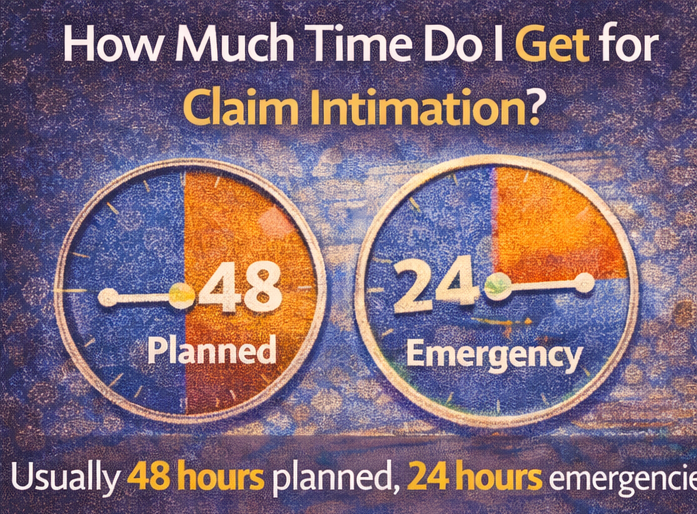
For planned hospitalisation, this is usually 48 hours before admission.
For emergencies, it is usually within 24 hours of hospitalisation.
Missing this step is one of the most common reasons for claim rejection.
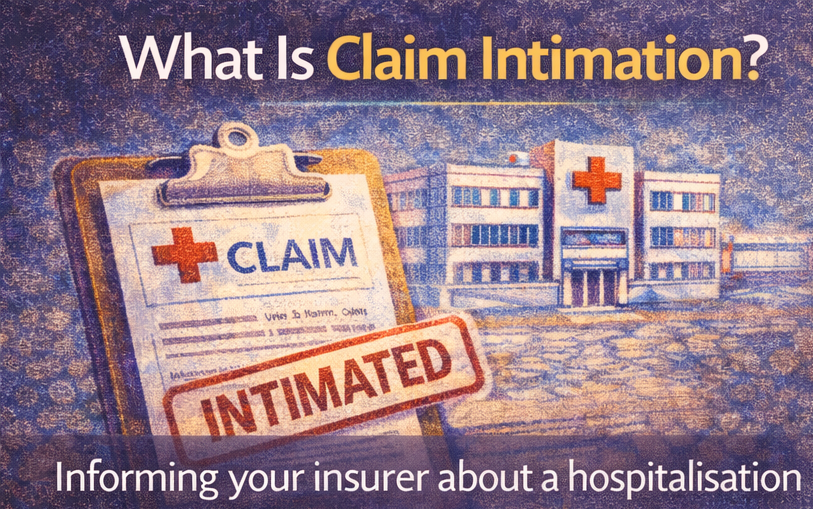
What Is Claim Intimation in Insurance?
In simple terms, claim intimation is just letting your insurance company know that you or a family member is being hospitalised or treated.
Insurance companies do not automatically know when you go to a hospital.
You must inform them so they can:
- Verify coverage
- Guide you on cashless or reimbursement
- Assign a claim reference number
- Prevent fraud or misuse
Without claim intimation, the insurer treats the claim as incomplete.
Why Is Claim Intimation So Important?
Because health insurance is not like a refund coupon.
It is a process-based system.
Claim intimation allows the insurer to:
- Check policy validity
- Confirm waiting periods
- Verify network hospital eligibility
- Approve cashless treatment
- Prepare for reimbursement documentation
Skipping claim intimation breaks this chain.
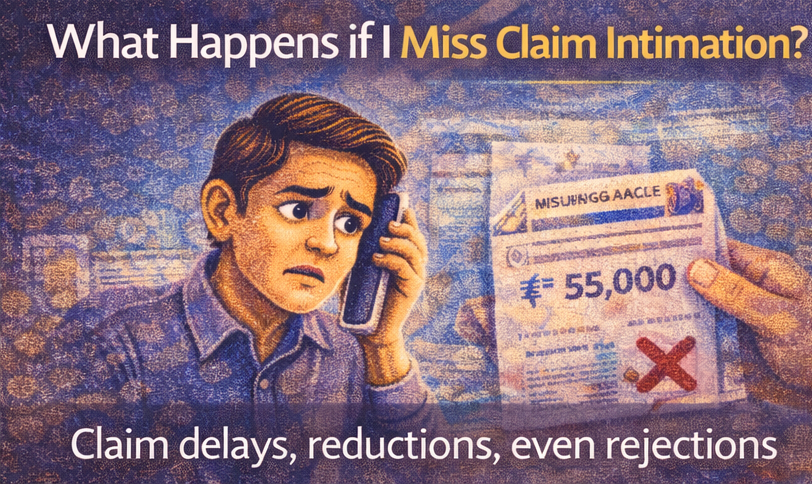
What Happens If Claim Intimation Is Missed?
This is where most people get shocked.
If claim intimation is not done:
- Cashless treatment may be denied
- Reimbursement claims may be delayed
- Claims may be partially paid
- In some cases, claims may be rejected outright
This happens even if:
- Policy is active
- Disease is covered
- Bills are genuine
Claim Intimation for Planned Hospitalisation
For planned procedures like:
- Surgery
- Scheduled treatment
- Pre-booked admission
You must do claim intimation at least 48 hours before admission.
This allows:
- Pre-authorisation
- Cashless approval
- Reduced paperwork stress during discharge
Claim Intimation for Emergency Hospitalisation
Emergencies are treated differently.
For emergencies:
- Claim intimation must be done within 24 hours of hospitalisation
- Some insurers allow up to 72 hours
Emergency situations include:
- Accidents
- Sudden illness
- Heart attack
- Stroke
- Severe infections
Even a family member can do claim intimation on your behalf.

How Do You Do Claim Intimation?
Claim intimation can be done through:
- Insurance company helpline
- Insurer’s mobile app
- WhatsApp (many insurers support this now)
- Third-party administrator (TPA)
- Insurance agent or broker
You usually receive:
- Claim reference number
- SMS or email confirmation
Keep this safe.
Claim Intimation vs Claim Filing (Very Important)
Many people confuse these two.
Claim intimation
→ Informing the insurer that hospitalisation has happened or will happen
Claim filing
→ Submitting documents and bills for payment
Claim intimation comes first.
Claim filing comes later.
Cashless Treatment and Claim Intimation
Cashless treatment is only possible if:
- Claim intimation is done on time
- Hospital is in the insurer’s network
- Pre-authorisation is approved
With the new “Cashless Everywhere” initiative, even non-network hospitals can offer cashless treatment — but only if claim intimation is done early.
Reimbursement Claims and Claim Intimation
For reimbursement:
- You pay hospital bills yourself
- Submit documents later
- Claim intimation is still required
Many people wrongly assume claim intimation is optional for reimbursement.
It is not.
Late intimation weakens your claim.
Documents Needed After Claim Intimation
After claim intimation, you will usually need:
- Claim form
- Discharge summary
- Original hospital bills
- Doctor’s prescriptions
- Diagnostic reports
- Cancelled cheque
- Policy copy (sometimes)
Missing claim intimation makes document verification harder.
How Long Does It Take to Get Reimbursement?
Once all documents are submitted:
- Most insurers settle reimbursement claims within 15 days
- Delays happen if documents are incomplete
Claim intimation done on time speeds this up.
What Is a Network Hospital?
A network hospital is a hospital that has a tie-up with your insurer.
At network hospitals:
- Cashless treatment is easier
- Paperwork is simpler
- Claim intimation is smoother
Non-network hospitals usually require reimbursement.
Can I Get Cashless Treatment in Another City?
Yes.
Most health insurance policies are:
- Pan-India
- Valid across states
- Accepted at network hospitals nationwide
Claim intimation is still mandatory.
What Is the Waiting Period and How It Affects Claim Intimation?
Waiting period refers to:
- Time during which certain diseases are not covered
Claim intimation does not bypass waiting periods.
If your claim is rejected due to waiting period, read:
👉 Health Insurance Claim Rejected Due to Waiting Period – Explained Simply
(Internal link to your article)
What If My Policy Has Lapsed?
If your policy has expired:
- Claim intimation will not help
- Claims are usually rejected
If you’re unsure about lapse rules, read:
👉 Policy Lapsed Due to Non-Payment – Can It Be Revived?
New Rule: Zero GST on Health Insurance (From Sept 22, 2025)
From September 22, 2025, individual and family health insurance policies in India will attract 0% GST, instead of 18%.
This means:
- Lower premiums
- Cheaper renewals
- Higher affordability
Claim intimation rules remain unchanged.
Common Myths About Claim Intimation
Myth: Claim intimation is only for cashless claims
Reality: It applies to reimbursement claims too
Myth: Agent will handle claim intimation
Reality: Responsibility is yours
Myth: Emergency means no rules apply
Reality: Emergency only extends the time window
Frequently Asked Questions (Google Snippet Friendly)
What does claim intimation mean in insurance?
Claim intimation means informing the insurer about hospitalisation within the required time.
Is claim intimation mandatory?
Yes, for both cashless and reimbursement claims.
What happens if claim intimation is late?
Claims may be delayed, reduced, or rejected.
Can claim intimation be done after discharge?
Sometimes, but it weakens your case.
How much time is allowed for claim intimation?
Usually 48 hours before planned admission or 24 hours after emergency admission.
How Claim Intimation Protects You Financially
Proper claim intimation ensures:
- Faster approvals
- Fewer rejections
- Less stress during emergencies
- Better communication with insurer
It turns insurance from paperwork into real protection.
How This Connects to Other Insurance Confusions
Many claim issues overlap:
- Waiting periods
- Pre-existing diseases
- Policy lapses
- Partial claim settlements
You may find these helpful:
- Pre Existing Diseases Not Covered – Explained
- Health Insurance Claim Rejected Due to Waiting Period
- Policy Lapsed Due to Non-Payment
Together, they explain 90% of claim rejections.
Still Confused About a Claim?
Insurance letters and emails are not written for humans.
Coming soon on ExplainThis.tech:
You’ll be able to upload your claim rejection letter or hospital bill and instantly understand:
- Whether claim intimation was missed
- Whether rejection is valid
- What you can still do next
No guesswork. No jargon. Just clarity.
Final Thought
Claim intimation sounds like a small step.
But in insurance, small steps decide big outcomes.
Understanding and doing claim intimation on time is often the difference between:
- A paid claim
- And a rejected one
And that’s exactly why ExplainThis.tech exists — to make sure technical words don’t cost you real money.