
Hidden Bank Fees in India You’re Probably Paying
(And How to Spot Them Before They Hurt)
You didn’t overspend.
You didn’t miss a payment.
Yet your bank balance is lower by ₹118, ₹147, or that mysterious ₹236.
Welcome to the world of hidden bank fees.
These charges rarely come with clear explanations. They show up as short codes, cryptic descriptions, or generic terms like “service charges”. Most people notice them only when it’s too late.
Let’s break down what hidden bank fees really are, why they exist, and how you can stop paying them.
Table of Contents
What Are Hidden Charges in Banks?
Hidden charges are fees that banks don’t clearly explain upfront or that customers don’t fully understand when opening an account.
They’re usually:
- Buried in fine print
- Explained in vague language
- Charged automatically without confirmation
Technically, they’re disclosed somewhere — but practically, most people don’t know they exist.
That’s why they feel hidden.
Common Hidden Bank Fees People Pay Without Realising
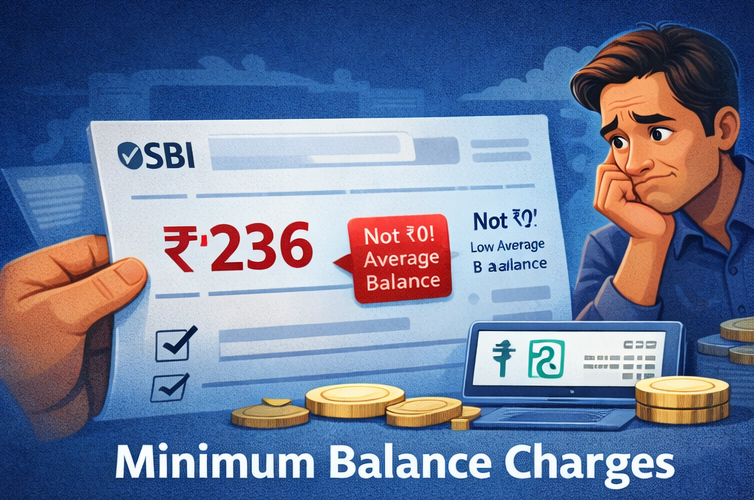
1. Minimum Balance Charges (The Most Common One)
This is where many people see deductions like ₹236, ₹147, or ₹118.
If your monthly average balance falls below a certain limit, the bank deducts a penalty.
Many users ask:
“Why is SBI charging 236 rupees?”
In most cases, it’s a minimum balance shortfall charge or a related service fee — even if you had money in the account on some days.
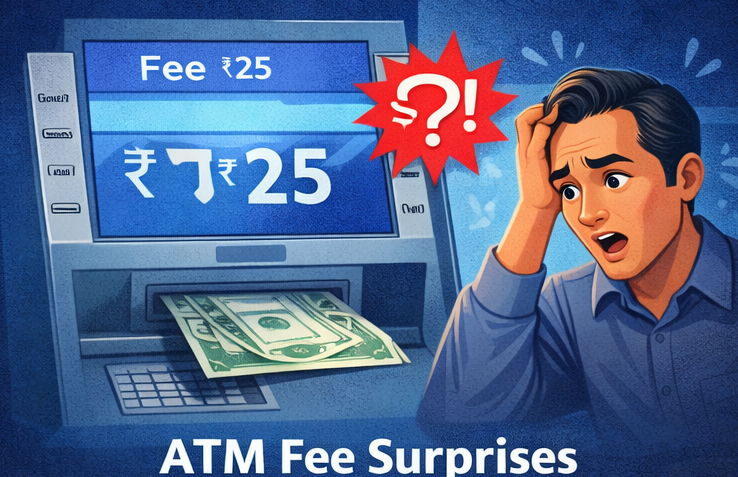
2. ATM & Cash Withdrawal Fees
- Free ATM transactions are limited
- Extra withdrawals = silent deductions
- Charges vary by bank and account type
You often notice these only when checking statements later.
3. SMS Alerts & Account Maintenance Fees
Yes, banks charge for:
- SMS alerts
- Quarterly maintenance
- Debit card annual fees
These are classic hidden bank fees because they’re small but recurring.

4. Debit Card & Renewal Charges
Many banks:
- Charge annually for debit cards
- Auto-renew without asking
- Deduct silently
The amount looks small — but over years, it adds up.
5. Failed Transaction & Reversal Delays
Sometimes:
- Money is debited
- Reversal takes days
- Temporary balance reduction leads to other charges
This chain reaction is rarely explained clearly.
Are Hidden Charges Legal?
This is important.
Yes, hidden bank fees are legal — as long as:
- They’re disclosed in terms & conditions
- Banks inform customers somewhere (even if poorly)
But legality ≠ fairness.
This exact issue has been raised multiple times in public discussions, including debates around hidden bank fees charges, where public figures like Raghav Chadha have highlighted how confusing and consumer-unfriendly banking charges can be.
The problem isn’t legality — it’s clarity.
Hidden Bank Fees: India vs US (Why People Search This)
You may have seen searches like:
- chase bank hidden fees
- citi bank hidden fees
- credit one bank hidden fees
- us bank hidden fees
- bank of america hidden fees
- up bank hidden fees
This shows one thing clearly:
Hidden bank fees are a global problem, not just an Indian one.
Whether it’s SBI in India or Chase in the US, the frustration is the same:
“Why wasn’t this clearly explained?”
What Is a Hidden Fee? (Simple Definition)
A hidden fee is:
A charge you didn’t reasonably expect, understand, or notice until after it was deducted.
Example of a Hidden Fee
- ₹236 deducted as “service charge”
- No prior alert
- No clear explanation in-app
That’s a hidden fee — even if it’s technically allowed.
What Are the Three Types of Bank Fees?
Most bank charges fall into these categories:
- Maintenance Fees
(minimum balance, SMS alerts, debit card fees) - Transaction Fees
(ATM usage, cash deposits, transfers) - Penalty Fees
(late payments, balance shortfall, failed transactions)
Understanding this makes spotting hidden charges much easier.
How to Avoid Paying Hidden Bank Fees (Practical, Not Theoretical)
1. Track Monthly Average Balance (Not Daily Balance)
Many people think, “I had money, why was I charged?”
Banks care about monthly averages, not one-day balances.
2. Read Statements Line by Line (Once a Month)
You don’t need to do this daily.
Once a month is enough to catch recurring hidden fees early.
3. Switch to Zero-Balance or Basic Accounts
If you don’t maintain high balances, zero-balance accounts remove most hidden charges completely.
4. Ask for a Fee Waiver (Yes, It Works)
Many people don’t realise this:
👉 Banks often waive fees if you ask politely.
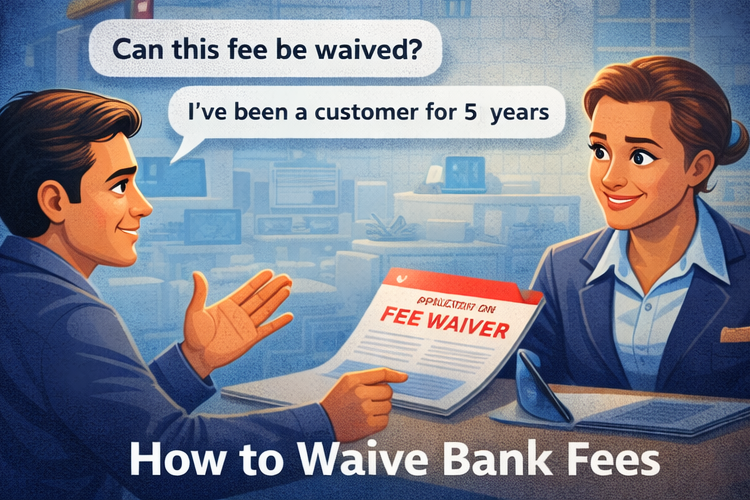
How to Ask Your Bank to Waive Fees (Exact Approach)
You don’t need aggression. Use calm clarity.
Example:
“This fee was deducted without my awareness. I’ve been a regular customer. Could you please waive this charge as a one-time exception?”
What Qualifies You for a Fee Waiver?
- First-time charge
- Salary account
- Senior citizen / student
- Long account history
- Good transaction record
This answers:
- How to get bank fees waived
- How do I ask my bank to waive a fee
- How to politely ask to waive a fee
Frequently Asked Questions (Google Snippet Friendly)
What are hidden charges in banks?
Hidden charges are fees deducted without clear upfront explanation, often shown as vague entries in bank statements.
What is meant by hidden costs?
Hidden costs are expenses you didn’t plan for or clearly agree to, but still end up paying.
How do I avoid hidden fees?
Track balances, review statements monthly, choose zero-balance accounts, and question unclear deductions.
Why is my bank charging small random amounts?
These are usually maintenance, minimum balance, or service-related fees.
Are hidden bank fees legal?
Yes, if disclosed in terms — but banks are expected to communicate them clearly.
How do I waive my bank account fees?
Contact customer care or visit the branch and request a waiver politely, especially for first-time charges.
What are three types of charges?
Maintenance fees, transaction fees, and penalty fees.
Still Wondering Why Your Money Disappeared?
Bank statements are not written for humans.
They’re written for systems.
Coming soon on ExplainThis.tech:
You’ll be able to upload your bank statement and get a clear, human explanation of every charge — what it is, why it happened, and whether you can avoid it next time.
No jargon. No panic. Just clarity.
Final Thought
Hidden bank fees don’t make you careless.
They make banking complicated.
The more you understand them, the less power they have over your money.
And that’s exactly why ExplainThis.tech exists.
elated Reads on ExplainThis.tech
If you’re facing repeated UPI issues, these may help:
- Service Charges debited from my bank account – what does it mean?
- UPI Transaction Limits in India Explained
- Why did my bank deduct ₹236 suddenly?
Understanding these together helps you avoid panic and repeated failures.
Pingback: UPI Transaction Limits in India Explained -